

Research notes
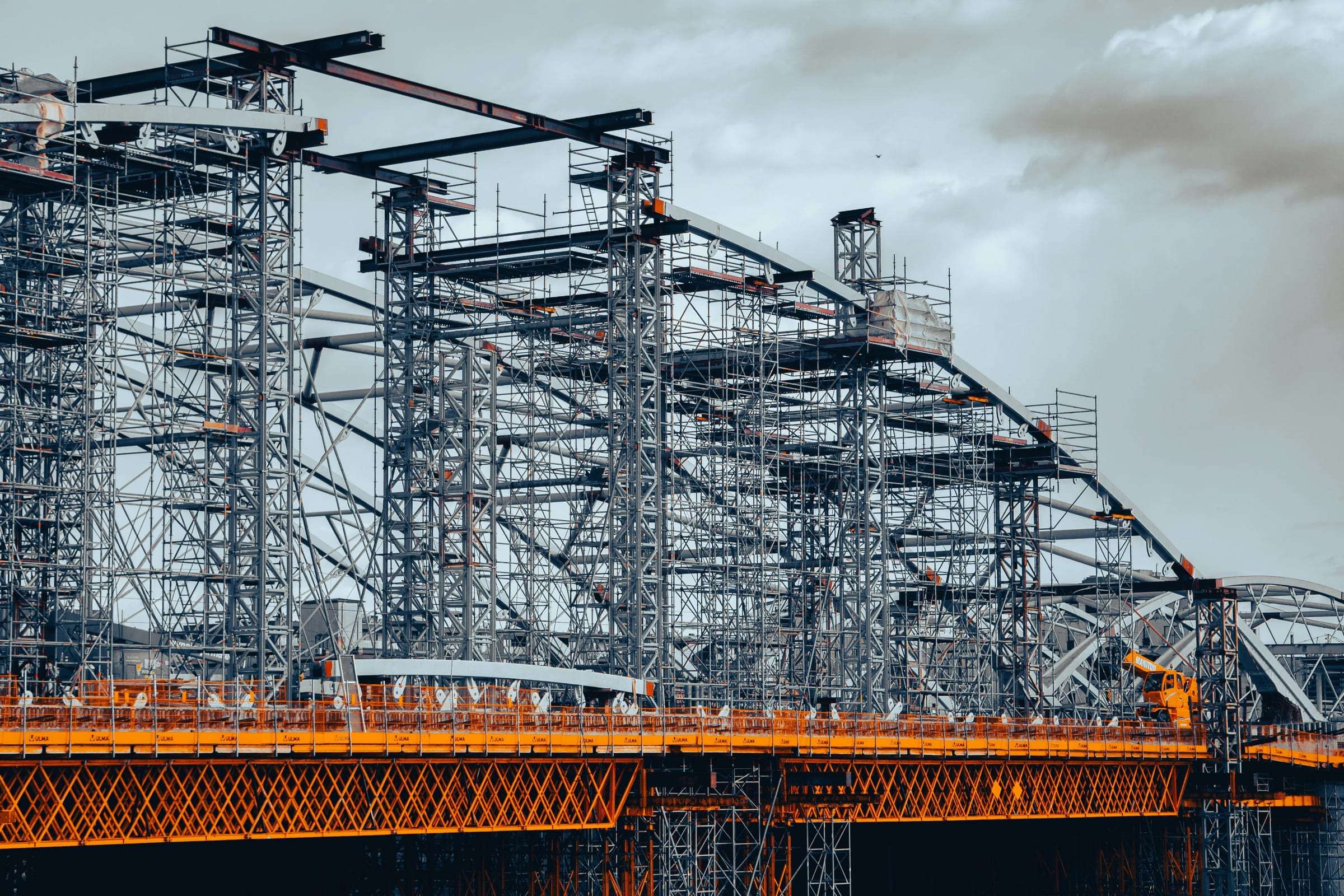
Most steel bridge inspection is visual, and the result depends on who looks.
A 2021 review of NDT for steel bridges finds visual inspection is the most common method and the most subjective: different technicians can report different results. Our take: when the method depends on the technician, the report has to record the same things every time.
 Nolan Hanson, Product Owner
Key takeaways
- A 2021 review of NDT for steel bridges finds visual inspection is the most common method and the most subjective.
- Where critical damage is possible, the authors recommend pairing it with another method.
- Our take: when the method depends on the technician, the report has to record the same things every time.
On a steel bridge, the inspection that happens most is also the hardest one to repeat. Visual inspection is cheap and fast, and needs little more than a light and a magnifier. It also depends on the person holding the light.
That's one of the clearest findings in a review of nondestructive testing for steel bridges by Seyed Saman Khedmatgozar Dolati, Nerma Caluk, Armin Mehrabi, and Seyed Sasan Khedmatgozar Dolati, published open access in Applied Sciences in 2021. It's a useful map of the methods, and a reminder of what the report has to carry.
The paper: Non-Destructive Testing Applications for Steel Bridges, Seyed Saman Khedmatgozar Dolati, Nerma Caluk, Armin Mehrabi, Seyed Sasan Khedmatgozar Dolati. Applied Sciences, vol. 11, article 9757, 2021. DOI 10.3390/app11209757.
What the review covers
The paper gathers in one place the NDT methods used on steel bridges, with a focus on finding local damage rather than monitoring the whole structure. It covers why bridges are inspected, the damage they develop, each method's strengths and limits, and newer approaches: robotics, vision-based monitoring, and digital image processing.
The context is regulatory. In the US, the National Bridge Inspection Standards require bridges longer than 20 feet on public roads to be inspected every 24 months by a qualified bridge inspector. Corrosion is the most common problem the authors list, followed by fatigue and fracture in sensitive connections, some of it made worse by welding issues.
What it found
The authors sort the methods by what they can see. Visual inspection, dye penetrant, magnetic particle, and eddy current testing find surface defects. Acoustic emission, infrared thermography, ultrasonic, radiographic, and laser methods reach defects below the surface, and most can find surface damage too.
Each comes with a cost. Radiography can find porosity, cracks, and inclusions inside a weld with high accuracy, but it's slow, costly, and a radiation hazard. Ultrasonic testing is sensitive and accurate, with relatively expensive equipment. Acoustic emission finds active, growing cracks but not inactive ones. Robotics, the authors conclude, has made bridge NDT more reliable and accurate while cutting inspection time and cost.
Visual inspection gets the closest look, because most steel bridges rely on it. The paper calls it the least costly and easiest method, but its results are subjective: in the authors' words, "different results could be reported by different inspectors." Traffic, working at height, a limited viewing angle, poor lighting, and juggling element ratings all affect whether a flaw gets called a defect that needs follow-up.
Their recommendation follows from that. Where critical damage is possible, pair visual inspection with another method, and use visual aids and image-based tools to make the results more accurate and repeatable.
What it means for the report
A bridge is inspected again and again over its life, by different people. The next technician, 24 months later, reads the last report before climbing up. If that report says the weld is fine, with no location, method, or reasoning, there's nothing to compare against.
So the report has to carry what the next person needs to repeat the call: the member and joint, the method and technique, each indication with its location and size, the accept or reject call, and who made it, with their certification. On new steel, it also names the welding code the work was inspected to: AWS D1.5 for highway bridges, AWS D1.1 for most other structural steel. A photo of what was seen often says more than a paragraph about it.
Its limits
The paper compiles published work rather than reporting new tests, and it centers on finding local damage on steel bridges; monitoring the whole structure gets less space. Some of the newer approaches it covers, such as robotic and vision-based inspection, come from ongoing research rather than routine practice.
Its comparisons are qualitative. It tells you which method suits which kind of defect, not how often each one finds it.
Our take
We agree with the authors that the answer to subjective inspection isn't to stop trusting technicians. It's to make their judgment visible and consistent. Two technicians can still disagree about a flaw. What shouldn't differ is what each of them was asked to record.
That part, software can fix. In Weld Done, the job starts from the company's inspection plan, every technician on the crew fills in the same steps, and the report comes out in the same template. Your second signer signs. They don't rewrite.
Better methods will keep arriving, robots included. The record that ties their results together is still the report.
See how it works on the Standards logic page, or read why NDT service companies switch from Excel and PDF. The NDT reporting checklist has eight ways to get reports right the first time.
Author
Who wrote it.
Nolan Hanson
Product Owner
FAQ
Questions.
Every other answer is on the FAQ page.
What NDT methods are used on steel bridges?
Visual inspection is the most common. Dye penetrant, magnetic particle, and eddy current testing find surface defects; ultrasonic, radiographic, acoustic emission, infrared thermography, and laser methods reach below the surface. A 2021 review in Applied Sciences compares each one's strengths and limits.
Why is visual inspection of steel bridges subjective?
It depends on the technician's experience, and on conditions such as traffic, height, viewing angle, and lighting. The review notes that different technicians can report different results, and recommends pairing visual inspection with another method where critical damage is possible.
How often are US bridges inspected?
Under the National Bridge Inspection Standards, bridges longer than 20 feet on public roads are inspected every 24 months by a qualified bridge inspector, as the review notes.
See your own report rebuilt.
Book a 30-minute demo on one of your real reports.
Not ready to talk? The calculator works out hours and costs back from your own numbers.