

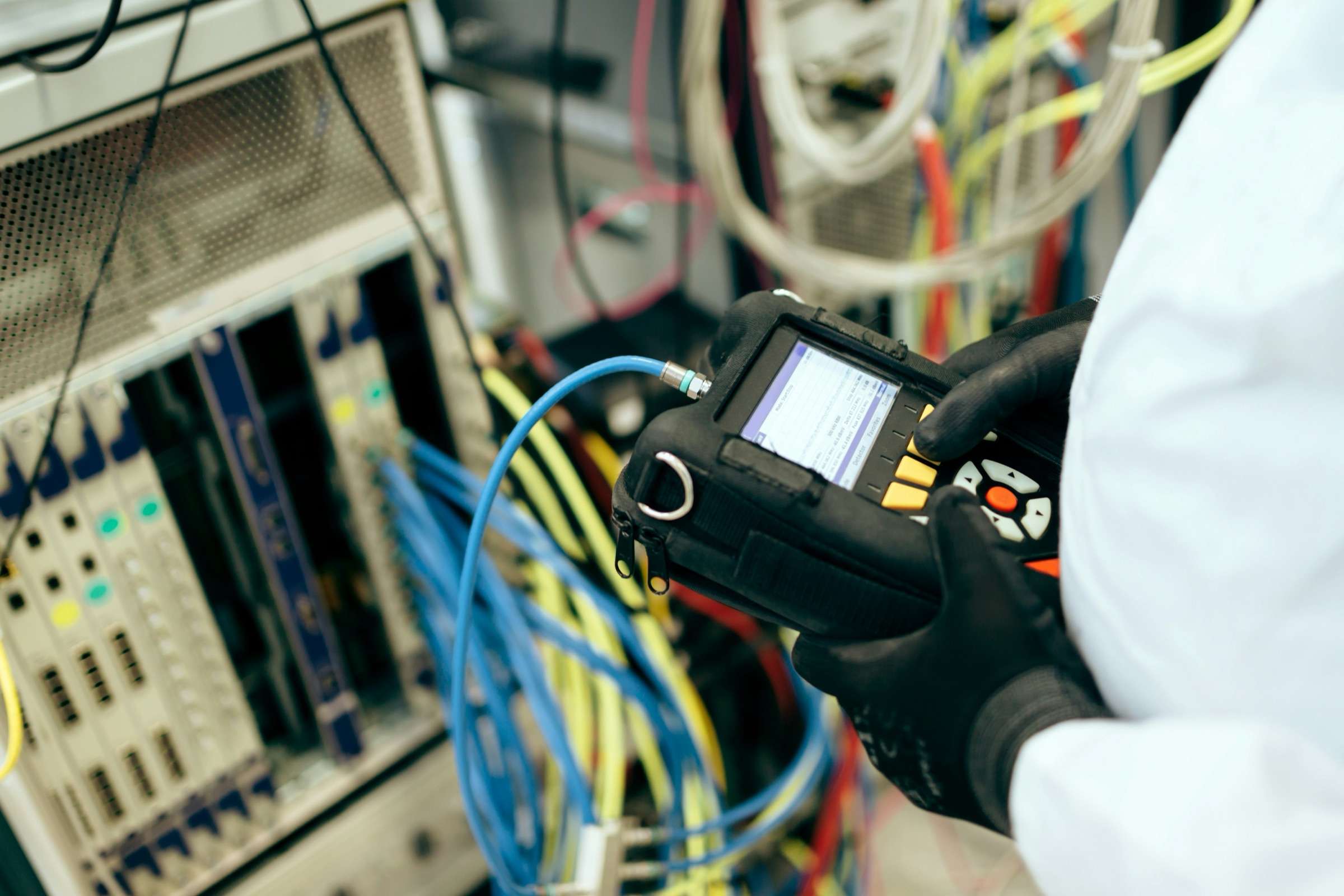
Method
Radiographic testing for weld inspection.
RT sends radiation through a weld onto film or a digital detector, so flaws inside the weld show up on the image. Here's how it's done, which codes set its rules, who can perform it, and what an RT report has to carry.
- Image
- Film or a digital detector
- Procedure
- ASME Section V, Article 2; API 1104 on pipelines; ASTM E94 and E2698
- Acceptance
- API 1104 on pipelines; otherwise the code the job is built to
- Inspector
- Certified to SNT-TC-1A or CP-189, plus radiation safety training
How it works
Radiographic testing in plain terms.
A source, an X-ray tube or a gamma isotope, sits on one side of the weld, and film or a detector on the other. Each shot records one view; a pipe weld takes several shots to cover its whole circumference.
An image quality indicator (IQI) on the weld shows the image is sharp enough to judge. The interpreter reads each image, names every indication, and makes the accept or reject call against the code the job is built to.
In the glossary: DICONDE · DR and CR · Film density · Incomplete penetration · IQI · Porosity · Sensitivity · Shot · Slag inclusion
Techniques
Sources, detectors, and shot layouts.
The source is an X-ray tube or a gamma isotope. X-ray tubes need power, and their energy can be adjusted to the wall thickness. Gamma sources, such as iridium-192 and selenium-75, need no power, which is why they're common on pipelines and remote jobs.
The image is captured on film, on reusable phosphor plates (computed radiography, CR), or on a digital detector array (DR). Digital methods give images in minutes instead of after processing, and they're covered by their own ASME and ASTM requirements.
On pipe, the shot layout depends on access and diameter. Double-wall single-image shots, with the source outside the pipe, are the usual choice on field welds. Small-diameter pipe can be shot double-wall double-image, showing both walls on one exposure. Where a crawler or source can go inside the pipe, a single panoramic shot covers the whole weld at once.
Proving the image is good enough.
An image quality indicator (IQI), either hole-type or wire-type, is placed on the source side of the weld where possible. The image passes when the required hole or wire is visible. On film, the density must also fall inside the limits the code sets. Without the IQI and density on the record, a reviewer can't show the image was good enough to judge.
Strengths and limits
Where RT works and where it stops.
It leaves a permanent image that a reviewer, a client, or an auditor can look at again, and it shows volumetric flaws like porosity and slag well.
It needs a radiation exclusion zone and access to both sides of the weld. Planar flaws like lack of fusion can be missed if they don't line up with the beam. Both are part of why PAUT is replacing RT on many jobs.
Who can perform RT
Who can perform RT.
RT has two layers of qualification. Like every NDT method, the inspector who interprets the film is certified to SNT-TC-1A or CP-189, usually at Level II. Working with the source is regulated separately. In the US, industrial radiographers need radiation safety training and certification under NRC or state rules, and at temporary job sites at least two qualified people must be present. In Canada, exposure device operators are certified by the CNSC.
The report
What an RT report has to carry.
The fields a Level III checks before signing, in the order the report runs. Miss one and the report comes back.
The job
- Job, client, and location
- Drawing or line number
- Weld ID and welder ID
Procedure and material
- WPS reference
- Material, diameter, and wall thickness
- Governing code and the acceptance criteria applied
Technique and equipment
- Source or kV
- Film or detector type and resolution (pixel size or film speed)
- IQI type and sensitivity
- Source-to-film distance
- Exposure time and shot layout
Results
- Each indication: type, location, size, and the accept or reject call
- Final disposition per weld
- Repair tracking
Sign-off
- Technician name, cert level, and signature
- Reviewer sign-off and date
How Weld Done builds your NDT report template
Standards logic
Checked at capture, not after the report.
Each RT indication is checked against the acceptance limits as it's entered. A rejected one shows the clause, the value, and the limit.
Standards logic →Where reports go wrong
What sends an RT report back.
- No IQI on the record
- The image may be fine, but without the IQI type and sensitivity on the report, the Level III can't show it was sharp enough to judge.
- Acceptance from the wrong code
- A pipeline weld judged against another code's limits, because the last job's template was copied.
- Shots that don't cover the weld
- A shot layout that leaves part of the circumference unread, found only when someone asks for the missing view.
The NDT reporting checklist: eight ways to get reports right the first time
FAQ
Questions.
Every other answer is on the FAQ page.
What does a radiographic testing report have to include?
The job and weld, the procedure and material, the governing code and acceptance criteria, the technique and equipment (source or kV, film or detector, IQI, source-to-film distance, and shot layout), each indication with its call, and the technician's and reviewer's signatures.
Film or digital radiography: does the report change?
Mostly. The job, procedure, and result fields are the same. A digital report adds the detector and image-quality values; a film report adds film class and processing.
Who can perform radiographic testing?
An inspector certified to SNT-TC-1A or CP-189 interprets the images. Anyone handling the source also needs radiation safety training and certification under the rules where the job is.
What is an IQI?
An image quality indicator: a small plate with holes or a set of wires of known size, placed on the weld during the shot. If the required hole or wire is visible, the image is sharp and sensitive enough to judge. Its type and the sensitivity reached go on the report.
Can we download an RT report template?
Not yet. Until there's a sample report we can publish, this page lists everything the report has to carry.
A summary, not the code: procedures and limits are in the edition your job works to.
See your own report rebuilt.
Book a 30-minute demo on one of your real reports.
Not ready to talk? The calculator works out hours and costs back from your own numbers.